Signs Your Commercial Roof Needs Maintenance in South Florida
What Property Managers Should Look for Before Small Problems Become Expensive Repairs
Commercial and high-rise roofs in South Florida face demanding conditions throughout the year. Extreme heat, intense UV exposure, heavy rainfall, high humidity, salt air, tropical storms, and hurricanes can all accelerate roof deterioration.
For property managers and condo associations, waiting until water begins leaking into the building is one of the most expensive ways to manage a roofing system.
At Hi-Rise Roofing, we recommend taking a preventative approach. Regular inspections and commercial roof maintenance can identify small problems early, extend roof life, and help property managers plan repairs before they become emergencies.
Here are 10 key areas to watch when evaluating the condition of a commercial, condominium, or high-rise roofing system in South Florida.
1. Ponding Water and Poor Roof Drainage
Water that remains on a flat or low-slope roof after a rainstorm is one of the most important warning signs for property managers.
South Florida receives frequent heavy rainfall, so commercial roofing systems must move large amounts of water efficiently. Blocked drains, clogged scuppers, damaged gutters, or improper roof slope can cause water to collect on the roof.
Standing water can increase stress on the roofing system and accelerate deterioration of membranes, flashing, and other components.
Property managers should regularly inspect:
- Internal roof drains
- Scuppers
- Gutters and downspouts
- Drain strainers
- Areas where water regularly collects
If water continues to remain on the roof after rainfall, a professional roofing contractor should determine the cause.
2. Open Seams and Membrane Damage
Commercial roofing membranes expand and contract as temperatures change throughout the day.
South Florida’s extreme heat can make this movement particularly demanding on seams and attachment points.
Over time, seams can separate and roofing membranes can develop cracks, punctures, splits, or other damage.
These small openings provide a path for rainwater to enter the roofing assembly.
TPO, modified bitumen, built-up roofing, and other commercial systems should be inspected regularly for visible deterioration.
Learn more about commercial roofing systems and services from Hi-Rise Roofing.
3. Flashing Around Roof Edges and Penetrations
Flashing is installed around roof edges, walls, curbs, penetrations, and other transitions to prevent water from entering the building.
These areas are also some of the most common locations for commercial roof leaks.
Property managers should watch for:
- Loose flashing
- Cracked sealant
- Open joints
- Corrosion
- Missing fasteners
- Separation from walls or curbs
Roof perimeter and edge conditions are particularly important on high-rise buildings because these areas can experience significant wind pressures during severe weather.
4. HVAC Units and Rooftop Equipment
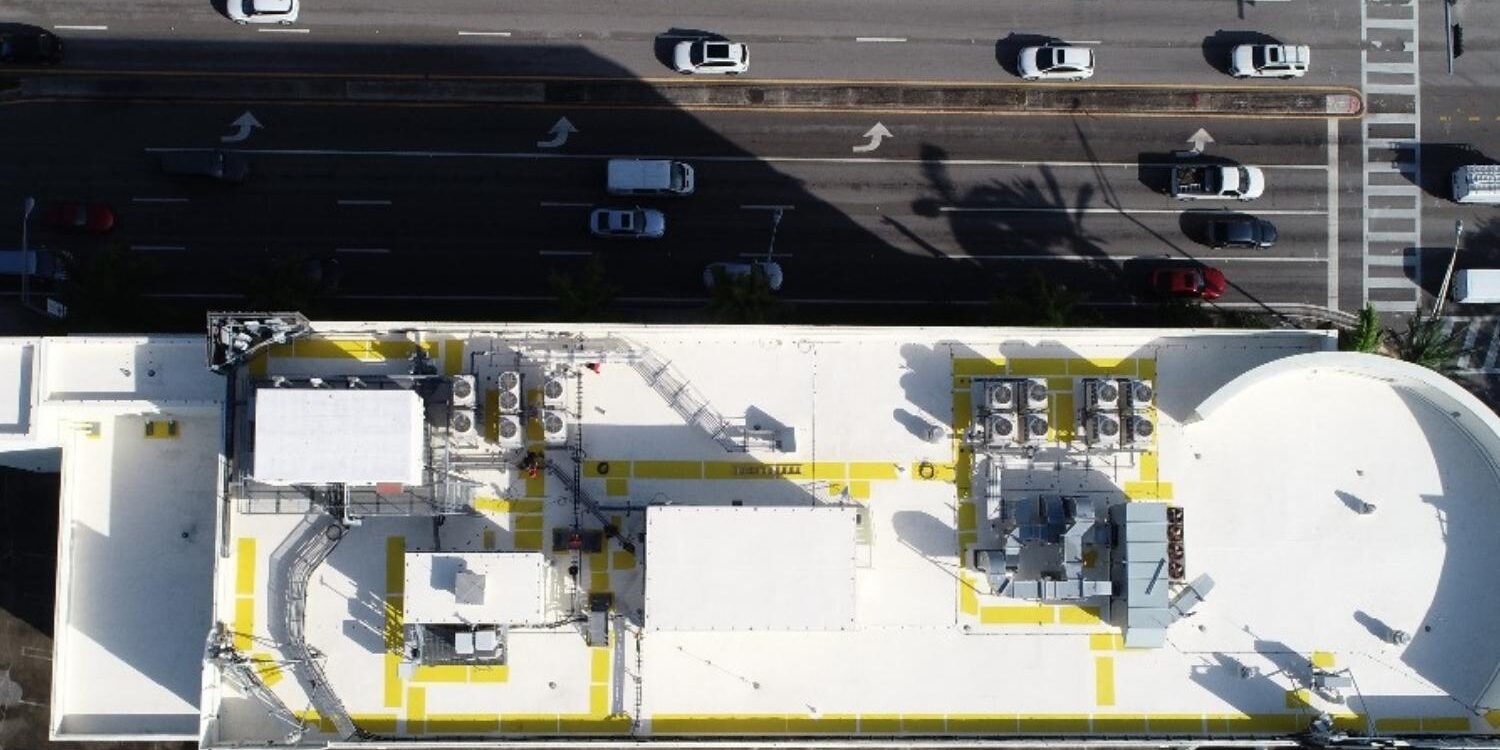
HVAC equipment is one of the most important areas to inspect on a commercial roof.
Roof penetrations around HVAC units, exhaust fans, vents, pipes, electrical equipment, and equipment curbs can become vulnerable as sealants and flashing age.
Maintenance technicians can also accidentally puncture or damage roofing membranes while servicing equipment.
Property managers should make sure HVAC contractors use designated walkways where appropriate and avoid placing tools, equipment, or removed mechanical components directly on the roofing membrane.
After major HVAC work, having the surrounding roof area inspected can help identify accidental damage before the next heavy rain.
5. Cracking, Blistering, and Surface Deterioration
South Florida’s intense sunlight and heat gradually break down roofing materials.
UV radiation and atmospheric oxidation can cause roofing materials to lose flexibility and become brittle over time.
Warning signs include:
- Surface cracking
- Blistering
- Splitting
- Fading or chalking
- Loss of protective coatings
- Exposed roofing materials
Surface deterioration does not always mean the entire roof needs replacement. Addressing these conditions early may allow repairs or restoration to extend the system’s service life.
6. Rust and Corrosion on Metal Components
Salt air and humidity make corrosion an important concern for South Florida commercial and high-rise properties, particularly those near the coast.
Metal flashing, fasteners, roof edges, equipment curbs, drainage components, and other exposed metal should be checked for corrosion.
Rust should not be ignored. As metal deteriorates, it can eventually develop openings or lose its ability to properly protect and secure the roofing system.
7. Signs of Moisture Inside the Building
Not every roofing problem is first discovered on the roof.
Property managers and maintenance teams should regularly inspect interior spaces for evidence of water intrusion.
Warning signs include:
- Water stains on ceilings
- Discolored ceiling tiles
- Peeling paint
- Wet drywall
- Musty odors
- Moisture around windows or exterior walls
- Water appearing near mechanical rooms or roof penetrations
A small ceiling stain can be an early warning of a larger roofing problem above.
Water can also travel through the roofing assembly before appearing inside, which means the source of a leak may not be directly above the visible interior damage.
8. Previous Roof Repairs and Patches
Every commercial roof develops repair history over time.
Previous repairs should be inspected to make sure patches, sealants, flashing, and repaired seams are continuing to perform properly.
A growing number of patches can also provide valuable information about the overall condition of the roof.
If maintenance teams are repeatedly repairing different areas of the same roof, it may be time to evaluate whether continued repairs, restoration, or replacement provides the best long-term value.
9. Roof Damage After Tropical Storms and Hurricanes
Commercial roofs should be professionally inspected after significant storms, even when there is no obvious interior leak.
High winds and flying debris can cause damage that may not be visible from ground level.
Post-storm inspections should look for:
- Loose or damaged flashing
- Membrane punctures
- Open seams
- Displaced roofing materials
- Damage from flying debris
- Clogged drainage systems
- Damage around rooftop equipment
Documenting roof conditions before and after hurricane season can also provide property managers with valuable maintenance records.
For information about hurricane preparedness, visit the National Oceanic and Atmospheric Administration.
10. An Aging Roof with Increasing Maintenance Costs
Roof age alone does not determine whether a commercial roof needs replacement, but it should be considered alongside its condition and repair history.
If your maintenance budget continues increasing each year, the roof develops recurring leaks, or large areas of the system are deteriorating, it may be time for a more comprehensive assessment.
A professional inspection can help determine whether the best option is:
- Preventative maintenance
- Targeted roof repairs
- Roof restoration or coating
- Partial replacement
- Complete commercial roof replacement
Why Preventative Roof Maintenance Is Important for High-Rise Buildings
Roof maintenance is especially important for high-rise buildings and condominiums.
Access can be more complicated, wind exposure can be greater, and emergency repairs can require additional planning and coordination.
High-rise roofs may also contain significant amounts of mechanical equipment, communication systems, drainage infrastructure, and other rooftop components.
Finding and correcting a problem during a scheduled inspection is usually easier than responding to a leak during a major South Florida storm.
The National Roofing Contractors Association provides additional information about professional roofing practices and roof maintenance.
How Often Should a Commercial Roof Be Inspected in South Florida?
At Hi-Rise Roofing, we recommend that property managers establish a regular inspection and preventative maintenance schedule based on the roof system, age, condition, warranty requirements, and property needs.
For many South Florida commercial properties, inspecting the roof at least twice each year provides an opportunity to identify developing problems before and after the most demanding weather periods.
Additional inspections should be considered after hurricanes, tropical storms, major construction work, HVAC installations, or other events that may have affected the roof.
Don’t Wait for a Roof Leak to Start Maintenance
One of the biggest mistakes property managers can make is assuming a roof is in good condition simply because it is not currently leaking.
Open seams, deteriorated flashing, clogged drains, damaged membranes, and wet insulation can develop before water becomes visible inside the building.
A preventative maintenance program allows these problems to be identified earlier, when they may be easier and less expensive to address.
Commercial Roof Maintenance for Broward County Property Managers
At Hi-Rise Roofing, we help commercial property managers, condominium associations, building owners, and facility managers throughout Broward County and South Florida protect their roofing investments.
Our commercial roofing services include inspections, preventative maintenance, leak repairs, roof restoration, TPO roofing, modified bitumen roofing, low-slope roofing, and complete commercial roof replacement.
Regular maintenance can help extend roof life, reduce unexpected repairs, protect tenants, and make future capital expenses easier to plan.
Schedule a Commercial Roof Inspection in Broward County
If your high-rise, condominium, or commercial property has not had a professional roof inspection recently, now is a good time to understand its current condition.
Contact Hi-Rise Roofing to schedule a commercial roof inspection or call 954-792-5651 to speak with our team.
Identifying small roofing problems today can help prevent costly leaks, emergency repairs, and premature roof replacement tomorrow.